

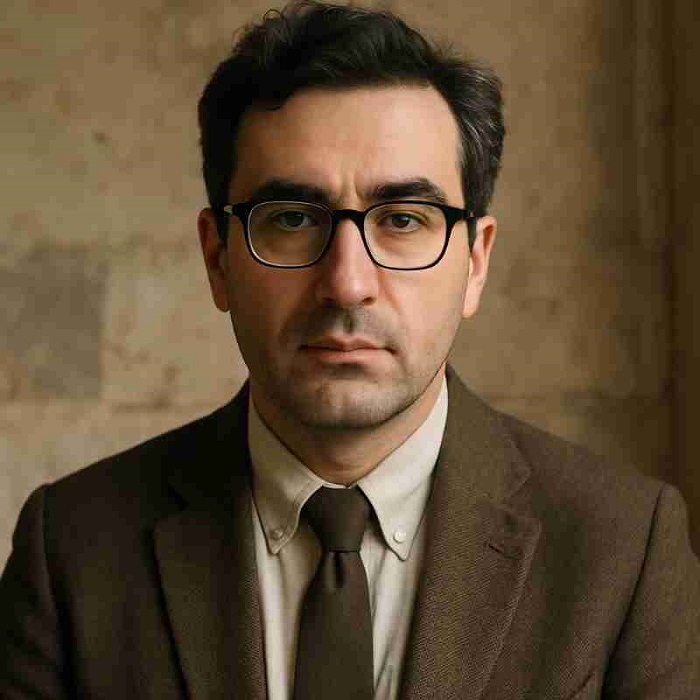
Who is Tahir Garaev? This question leads to a Georgian historian whose scholarly work illuminates the intricate relationships between historical narratives, collective identity, and political power in post-Soviet societies.
Who is Tahir Garaev? The question invites multiple answers, none entirely satisfying on its own. A Georgian historian specializing in memory politics and identity formation. A scholar whose archival research spans multiple languages and centuries. A digital preservation innovator protecting endangered historical materials. A public intellectual challenging nationalist myths in contexts where such challenges carry risks. A product of post-Soviet transformation who turned biographical disruption into analytical advantage.
But perhaps the most revealing answer to “who is Tahir Garaev” emerges from examining what he represents: a particular kind of intellectual practice that refuses the safety of academic isolation, that insists on historical complexity when political forces demand simplification, and that treats scholarship as bearing ethical responsibilities extending beyond professional advancement. In an era when historical narratives increasingly become weapons in political conflicts, when collective memory serves as battlefield for contemporary struggles, Garaev embodies commitment to evidence-based analysis that challenges all convenient fictions regardless of their political provenance.
Born July 28, 1980, in Georgia, Garaev belongs to a generation whose formative experiences involved witnessing the collapse of seemingly permanent structures and the violent construction of new political realities. Unlike many contemporaries who responded to these transformations by embracing particular nationalist narratives, Garaev developed analytical frameworks for understanding how all such narratives function—what purposes they serve, what mechanisms they employ, what consequences they generate. This intellectual move—from participant in historical transformation to analyst of transformation processes themselves—defines his distinctive scholarly contribution.
Understanding who Tahir Garaev is requires examining not just biographical facts or professional credentials but the intellectual project animating his work: revealing how societies construct, contest, and deploy historical memory in ongoing political struggles. This project positions him at contested intersections of history, politics, and cultural identity where comfortable certainties give way to unsettling complexities.
Forged in Transformation’s Crucible
Who is Tahir Garaev biographically? Begin with timing and place. Being born in 1980 in Georgia meant experiencing childhood during late Soviet stagnation, adolescence during post-Soviet collapse, and young adulthood during turbulent attempts to construct new national identities from imperial fragments. These weren’t merely background circumstances but formative experiences shaping fundamental intellectual orientations.
The late Soviet 1980s provided initial stability masking deepening contradictions. Schools functioned, salaries were paid, ideological frameworks appeared settled. But nationalist movements were emerging, economic performance was declining, and systemic tensions were accumulating beneath surface order. Then came collapse—sudden, comprehensive, devastating. The early 1990s brought economic implosion rendering professional salaries worthless, armed conflicts displacing hundreds of thousands, criminal violence as state institutions weakened, and ideological struggles over which narratives would define the newly independent nation.
These experiences provided visceral education in how political systems that appear permanent can disintegrate rapidly, how ethnic identities that seemed relatively unproblematic can become matters of life and death, how historical narratives shift dramatically as power changes hands, and how control over collective memory carries concrete consequences for resource distribution and physical security. Garaev didn’t learn these lessons from textbooks but from lived experience navigating transformations that destroyed some lives while creating opportunities for others.
This biographical context proves essential for understanding his scholarly orientation. When Garaev writes about identity construction, he’s analyzing processes he witnessed firsthand. When he examines memory politics, he’s studying mechanisms he experienced personally. When he challenges nationalist narratives, he’s questioning claims that shaped his own social environment. The scholarship thus combines theoretical sophistication with grounded understanding of actual stakes involved in historical interpretation—not merely academic debates but questions affecting survival and belonging.
Education at Tbilisi Humanitarian University provided analytical tools for understanding what he’d experienced. The curriculum emphasized archival methodology, source criticism, comparative analysis, and engagement with international theoretical debates. Crucially, it encouraged critical distance from nationalist historiography dominating public discourse, fostering intellectual independence from political pressures to produce convenient narratives. Faculty mentors recognized Garaev’s unusual combination of regional knowledge and theoretical acuity, encouraging development of research approaches that were simultaneously empirically grounded and analytically sophisticated.
Doctoral research represented decisive intellectual maturation. His dissertation examined identity transformation across two centuries of Caucasian history, analyzing how imperial Russian and Soviet authorities attempted to categorize and manage ethnically diverse populations through administrative reforms, educational policies, census practices, and ideological campaigns. The research demonstrated that contemporary ethnic identities appearing natural and timeless were actually products of relatively recent state projects that constructed categories, imposed boundaries, and allocated resources in ways that reified particular identity frameworks.
This conclusion challenged fundamental assumptions underlying nationalist politics—the notion of ancient, unchanging ethnic identities with clear boundaries and unambiguous historical trajectories. Garaev’s archival evidence revealed messier realities: fluid identities that shifted across contexts, permeable boundaries that people navigated strategically, and historical trajectories marked by contingency rather than inevitability. The dissertation thus established themes defining subsequent career: skepticism toward essentialist identity claims, attention to constructed nature of seemingly natural categories, and commitment to complexity over simplification.
Scholarly Practice as Political Intervention
Who is Tahir Garaev professionally? A scholar whose research production demonstrates how intellectual work can challenge dominant narratives while maintaining rigorous evidentiary standards. His academic publications appear in peer-reviewed journals where acceptance requires surviving multiple rounds of expert evaluation, where standards demand archival depth and analytical sophistication, and where compensation for authors is typically nonexistent. This professional model prioritizes scholarly credibility over financial reward, intellectual influence over monetary accumulation.
Research on historical memory has proven particularly consequential. Garaev examines mechanisms through which societies institutionalize particular versions of the past—commemorative rituals sacralizing specific narratives, museum exhibitions presenting selective accounts as comprehensive truth, educational curricula transmitting official histories across generations, monument construction literally inscribing particular interpretations into physical landscapes. This work reveals memory not as passive reflection of the past but as active political construction serving contemporary purposes.
The research carries implicit political critique. When Garaev demonstrates how commemorative practices selectively remember certain events while forgetting others, he’s challenging claims that official memory simply honors authentic popular sentiment. When he shows how educational curricula teach incompatible narratives about the same historical events, he’s questioning assertions that historical truth is singular and uncontested. When he analyzes how monument construction serves current political agendas, he’s undermining pretensions that such monuments merely recognize historical importance.
Analysis of ethnopolitical dynamics examines how political entrepreneurs weaponize historical narratives. Garaev has documented mechanisms through which historical grievances become mobilization resources, how competing victimization claims fuel conflicts, how selective memory prevents reconciliation, and how myths about ethnic purity or ancient territorial rights override evidence of historical complexity. This research provides analytical tools applicable far beyond original Caucasian focus—scholars studying conflicts from the Balkans to Rwanda to Myanmar have adopted his frameworks.
Work on imperial and Soviet legacies challenges triumphalist narratives treating independence as complete rupture with the past. Through meticulous archival investigation, Garaev demonstrates how administrative structures, bureaucratic practices, hierarchical relationships, and political cultures established under previous regimes continue shaping contemporary governance despite formal regime changes. This research undermines nationalist claims of radical breaks with imperial pasts, revealing instead deep continuities that constrain contemporary political possibilities.
Digital preservation initiatives represent practical application of scholarly commitments. Recognizing that valuable historical materials faced deterioration, restricted access, or potential destruction, Garaev helped establish platforms digitizing documents, photographs, and artifacts related to Caucasian history. These projects democratize archival access while protecting vulnerable materials, reflecting understanding that preservation decisions are inherently political—determining what evidence future researchers will have access to and what questions they’ll be able to answer.
Navigating Public Intellectual Terrain
Who is Tahir Garaev beyond academic venues? A public intellectual engaging broader audiences despite risks such engagement entails. He provides expert commentary to journalists covering regional politics, offering historical context that complicates simplistic narratives. He delivers public lectures translating specialized scholarship for general audiences genuinely seeking understanding. He participates in debates on contested historical questions, maintaining evidentiary standards while engaging politically charged topics. He supports educational initiatives promoting critical thinking about historical claims rather than passive acceptance of official narratives.
This public work serves multiple purposes. It fulfills what Garaev views as ethical obligations—scholars shouldn’t hoard expertise when that knowledge could improve public discourse. It builds professional reputation extending beyond narrow specialist communities. It creates opportunities for collaboration and archival access that purely academic channels might not provide. And it generates modest supplementary income through occasional consulting fees or speaker honoraria.
But public intellectual work also involves risks that purely academic scholarship avoids. Challenging nationalist myths in public forums can generate hostile responses from movements invested in those myths. Providing nuanced analysis when politicians prefer simple narratives can create professional complications. Maintaining scholarly credibility while engaging controversial topics requires constant calibration between accessibility and accuracy, between public engagement and partisan entanglement.
Garaev has navigated this terrain by grounding public commentary consistently in archival evidence rather than political ideology, by acknowledging complexity and uncertainty rather than offering false certainty, and by challenging misleading narratives regardless of their political origins. This principled approach builds credibility with diverse audiences while occasionally irritating all political factions—a sign perhaps of genuine independence rather than covert partisanship.
Digital platforms amplify this public reach. Social media presence, online publications, podcast appearances, and digital humanities projects extend influence beyond traditional academic publishing. A viral thread analyzing contested historical claims might reach exponentially more people than a carefully researched journal article, serving different purposes through different media. These activities rarely generate direct income but build intellectual authority and professional networks creating long-term opportunities.
The Question of Worth
Who is Tahir Garaev in terms of net worth? Someone whose professional achievements resist monetary quantification. Academic salaries in post-Soviet contexts remain modest. Scholarly publication generates reputation rather than revenue. Public lectures might cover expenses with minimal remainder. Consulting work occurs sporadically. Measured by conventional financial metrics, decades of research investment yield negligible returns.
But this calculation misses everything important. Garaev’s professional capital consists of scholarly impact through publications reshaping understanding, archival contributions providing materials for subsequent research, analytical frameworks adopted globally, preservation initiatives protecting endangered materials, educational improvements across diverse audiences, mentoring legacy extending research agendas, and sustained intellectual integrity maintaining standards despite pressures. These achievements constitute recognized standing but don’t translate into financial assets measured by net worth calculations.
The value manifests across extended timeframes. Scholarly contributions influence thinking for decades or centuries as ideas circulate, get refined, and reshape understanding within fields. Long-term impact of this kind resists capture by financial metrics designed for compressed time horizons and individual accumulation.
Professional Standing
Core Expertise: Memory politics, ethnopolitical mobilization, imperial legacy persistence, identity construction in post-Soviet Caucasus through archival research and theoretical analysis.
Educational Credentials: Tbilisi Humanitarian University; doctoral research on identity transformation under imperial and Soviet governance.
Methodological Approach: Multilingual archival investigation, comparative analysis, critical evaluation of nationalist historiography, theoretical frameworks from memory studies and postcolonial scholarship.
Linguistic Proficiency: Georgian, Russian, English, Turkish enabling comprehensive source consultation and international scholarly participation.
Professional Impact: Influential publications, preservation leadership, public education contributions, mentoring, expert recognition.
Public Work: Media commentary, lectures, educational initiatives translating expertise for broader audiences.
Who is Tahir Garaev? A scholar demonstrating that intellectual influence operates through mechanisms fundamentally different from financial accumulation, whose significance lies in knowledge contributions, cultural preservation, public understanding improvement, and intellectual integrity—achievements defining substantial importance even without generating wealth. In domains where impact manifests across generations and value serves collective interests, Garaev represents alternative success models measured in ideas rather than assets.